November 5, 2026
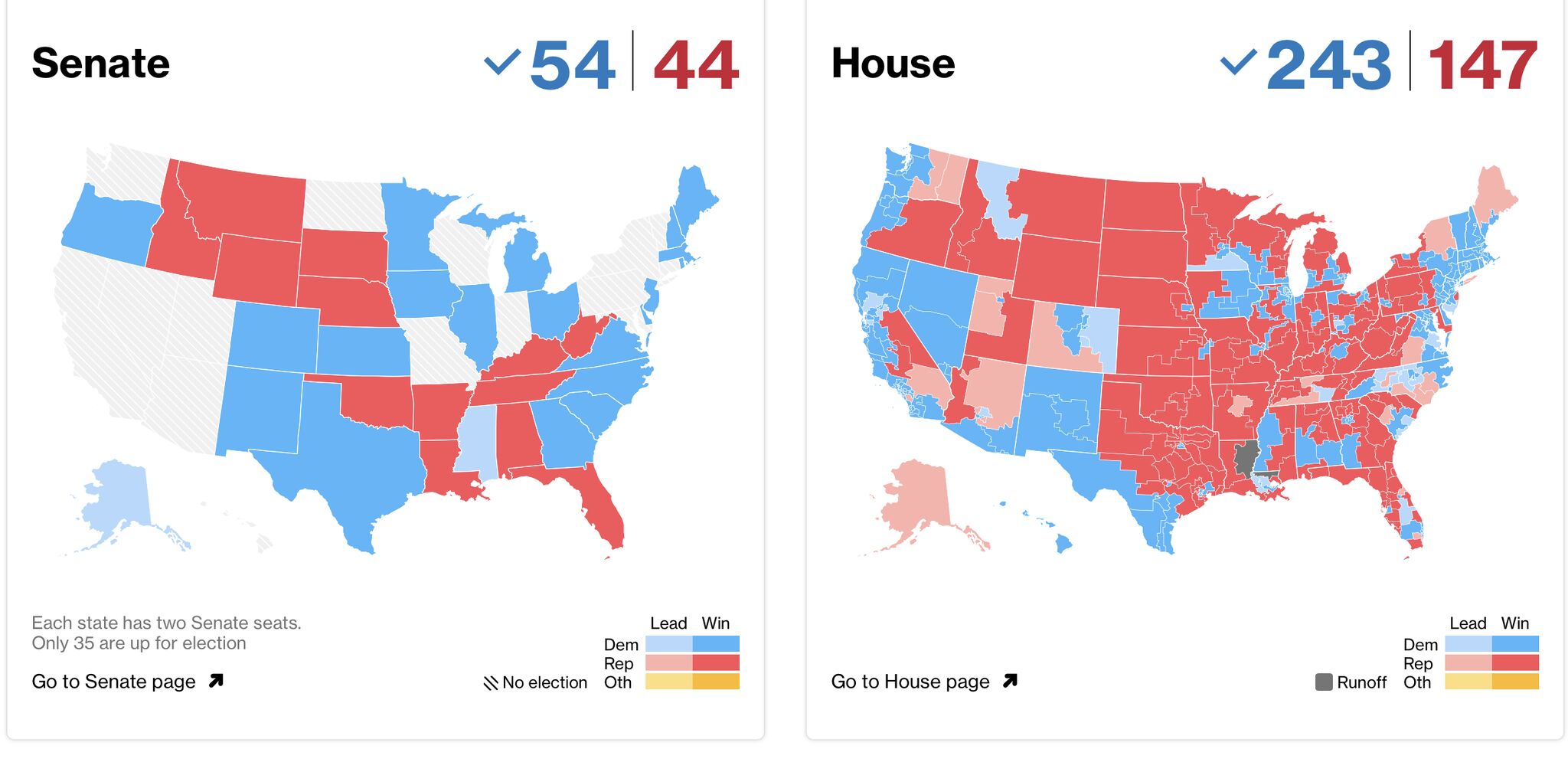
The 4 November vote placed purchasing power at the heart of the debate. The Democrats regain control of both chambers of Congress, altering the balance of power in Washington. Markets initially reacted with a rise in technology stocks and a fall in fossil fuels, anticipating lower costs for households. But this expectation masks a central question: will the strengthened checks and balances produce real savings or merely shift the burden?
On 4 November, US indices recorded contrasting moves. The S&P 500 rose 1.6%, the Nasdaq 0.9%. This moderate rise reflects a cautious allocation: investors welcomed certain election results while weighing the scale of the challenges ahead. The price of Brent fell 8%, settling at $95 a barrel, while the US ten-year yield stood at 4.85%.
Sector moves were more revealing. Amazon and Microsoft each gained more than 6%, anticipating a less restrictive regulatory environment and potentially slower growth in public spending on rival infrastructure. Conversely, the S&P 500 energy sector lost 4.8%, reflecting fears of reduced investment in fossil fuels.
The balance of power in Congress strengthens the checks and balances. With the presidential veto still in place and a legislative majority able to block new initiatives, Washington enters a phase of tight negotiation. Federal funding expires on 11 December, creating a critical inflection point. The ability to reach a budget agreement will matter far more than campaign promises of savings.
This dynamic is reassuring for respect of democratic institutions, but it does not resolve the structural budget deficit. Investors will need to watch whether the checks and balances produce genuine efficiency gains or simply generate paralysing gridlock.
Voters punished the inflation felt in daily life. The central question is: will cost-reduction policies benefit households or the public finances?
Increased support could relieve households in the short term, but at the cost of higher public spending. Supporting buyers without increasing the housing supply can keep prices high or push them higher, reducing the real benefit. The overall economic cost could remain unchanged, redistributed between sectors.
The vote increases pressure to reduce the costs linked to external conflicts (notably in Iran) and to tariffs. Congressional support for Ukraine may strengthen, changing spending priorities. However, Trump retains control of diplomacy and trade negotiations: real tariff relief has yet to materialise.
Lower regulatory uncertainty can support renewable energy valuations, even before any new support is granted. Projects benefit first from the clarity of the regulatory framework. The price of Brent reflects the anticipation of reduced investment in fossil fuels, creating a trade-off between energy sources.
Slowing investment in data centres could protect households from grid costs and limit the financing needs of the technology giants. But this scenario contains a paradox: less investment would reduce the capital expenditure of the large technology groups and strengthen their cash position in the short term, but would also reduce orders to suppliers and slow future revenue growth.
This benefit for shareholders assumes that the future revenues of the technology giants remain resilient despite reduced investment in capacity. That is a hypothesis, not a certainty.
The real test will be simple: voters are demanding a lower cost of living. Markets anticipate that the strengthened checks and balances in Congress will produce efficiency gains, freeing up resources for households. But there are other scenarios. The checks and balances could generate gridlock that prevents reforms. Budget savings could simply transfer costs from one sector to another, with no net benefit for households.
Over the coming months, investors will need to verify whether the political change produces real economic gains or merely shifts burdens within the system.
This is not investment advice.






