July 5, 2026
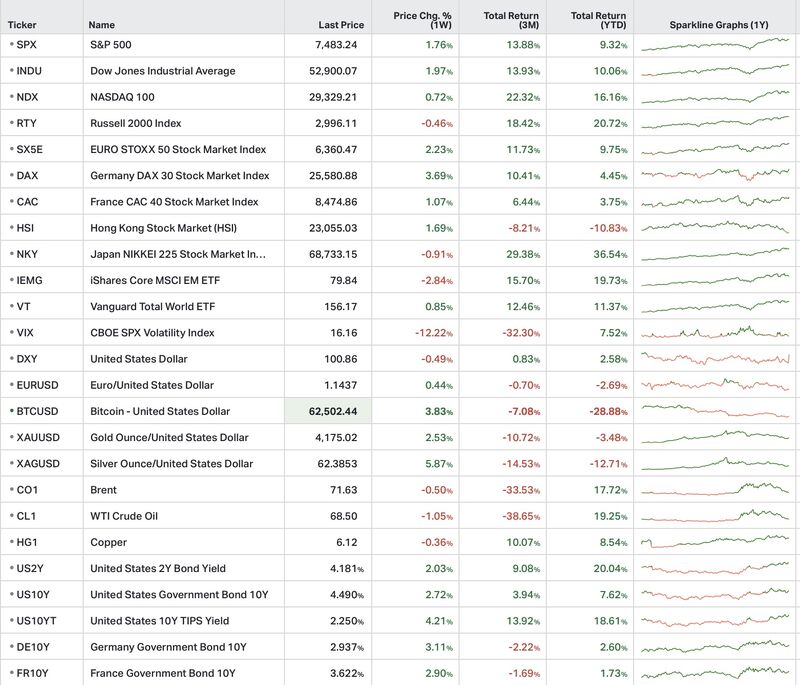
The main indices end the week higher.
The Nasdaq underperforms after the correction in the semiconductor sector. Overall, markets benefited from an easing in the Middle East and an economic scenario in which the slowdown in activity does not translate into a recession.
Sovereign yields continue to rise.
US statistics support the view that the Federal Reserve can maintain a patient approach, even if a further rate hike remains on the cards by the end of the year.
The decline in monetary tightening expectations weighed on the dollar over the week.
Oil returns towards its pre-war levels, while precious metals benefit from the weaker dollar.
The US economy created 57,000 jobs in June, while the unemployment rate stands at 4.2%. The slowdown in the labour market reduces pressure on the Federal Reserve, without calling the soft-landing scenario into question.
Inflation slows to 2.8%, from 3.2% in May, under the effect of falling energy prices. In this context, expectations of further rate hikes by the European Central Bank are fading.
The Japanese economy is approaching its longest expansion phase since the post-war period, supported by exports of semiconductors and technologies linked to artificial intelligence.
One of the main lessons of the week concerns the evolution of the artificial intelligence theme.
Rotation within the sector is becoming more visible. Investors no longer assume that all companies exposed to artificial intelligence will advance simultaneously. Company selection is taking on greater importance.
This shift was illustrated in corporate announcements. Meta is preparing a commercial offering of artificial intelligence computing power, with the aim of turning part of its infrastructure spending into future revenue. Following this announcement, CoreWeave, Nebius and several data-centre players fell, with the market anticipating increased competition.
At the same time, Samsung Electronics and SK hynix remain supported by a favourable outlook for memory chips, despite strong volatility in the sector.
Beyond artificial intelligence, investment flows remain largely oriented towards the United States. Despite debates about the end of American exceptionalism, capital continues to favour US equities, supported by earnings growth.
Finally, bond markets retain a more cautious reading than equity markets. While the latter remain mainly focused on corporate earnings and the outlook linked to artificial intelligence, bond investors give more weight to the prospects of economic slowdown and disinflation.
In the end, companies' ability to turn their investments into earnings appears to be the main driver of the valuations observed this week.