October 13, 2026
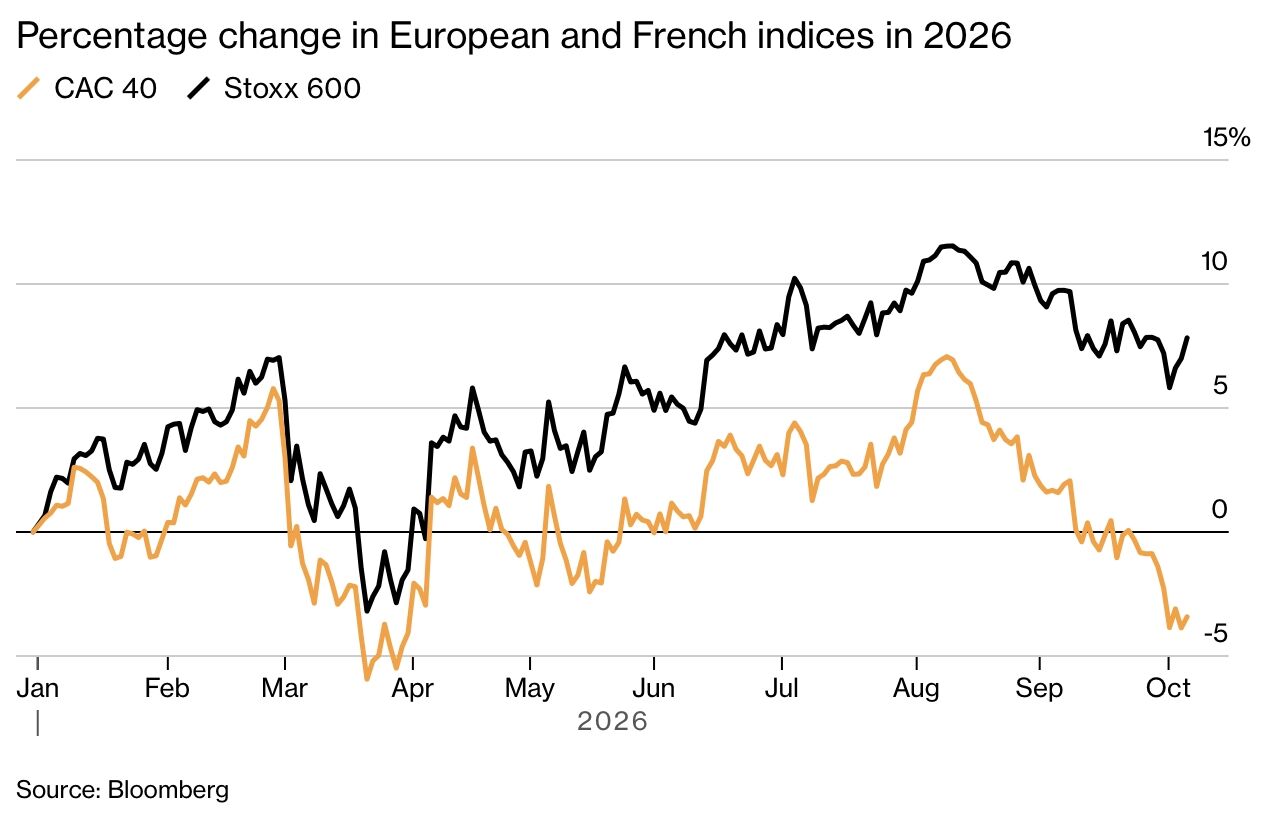
The CAC 40 is lagging the Euro Stoxx 50 by 11.27 percentage points since January 2026. Beyond this simple performance gap, two distinct phenomena explain the decline: macroeconomic factors specific to France and a sector composition less favourable to the current growth drivers. Understanding this distinction is essential to assess whether the market offers an opportunity or reflects structural risks.
The French ten-year yield stands at 4.905%, versus 3.477% in Germany, creating a spread of 142.8 basis points. This spread goes beyond the simple effects of monetary policy or general inflation in the euro area. It reflects a risk premium that the market applies to French debt.
This premium is justified by several factors: high public debt, moderate economic growth and degraded budgetary credibility. The expected deficit reaches 5.4% of GDP in 2026, exceeding the initial targets. Even the stated target for 2027, at 5%, will not be enough to stabilise the debt-to-GDP ratio. The market now expects concrete measures beyond mere announcements.
The composition of the CAC 40 amplifies this macroeconomic handicap. Luxury, a major weight in the index, is subject to a convergence of pressures: weakened Chinese demand, a flagging US market and obvious limits to price increases. These constraints weigh directly on earnings and valuations.
Automotive, the second major French exposure, faces growing competition from Asia and is experiencing a gradual erosion of margins. Meanwhile, other European regions capture the favourable trends better: the Netherlands benefits from the weight of semiconductors, Spain and Italy take advantage of a relative overweight in banks. The CAC does not have these same growth levers.
Energy and aerospace provide some counterweight, but are not enough to offset the weight of luxury and automotive.
Around 85% of CAC 40 revenue comes from abroad. This figure makes a simple equation unwise: a fall in the French index does not mean that the companies making it up are suffering from a declining France.
The CAC's large groups have international growth drivers. Their earnings and cash flow depend above all on their ability to operate in these global markets. On the other hand, they remain exposed to French fiscal and financial risks: a risk of their cost of capital being repriced owing to the sovereign risk premium, or tax reforms.
Domestic companies, less represented in the CAC, depend more on domestic consumption, public orders and local financing. Their low valuation prices in more direct economic risks. If expected earnings fall, this discount can absorb the shock without creating an opportunity.
The CAC currently trades at around 13 times forward earnings. This multiple is close to its historical average and to that of the Euro Stoxx 50. The CAC's stock market lag therefore does not reflect a discount sufficient to conclude that it is undervalued.
A catch-up would require either an improvement in the earnings outlook, or a reduction in the French risk premium. Neither is currently the case. This distinction is crucial: a low price is not automatically an opportunity; it can also reflect real risks.
A company's nationality, being listed in Paris or Amsterdam, does not measure its real economic exposure or its relevance to a portfolio. The outlook for the large French groups and the trajectory of confidence in the French state's ability to manage its debt are distinct phenomena.
An allocation to French markets must rest on a detailed analysis of sector exposures, earnings growth prospects and the evolution of macroeconomic risks, not on a simple bet that "Paris will catch up with Europe".
This is not investment advice.