October 22, 2026
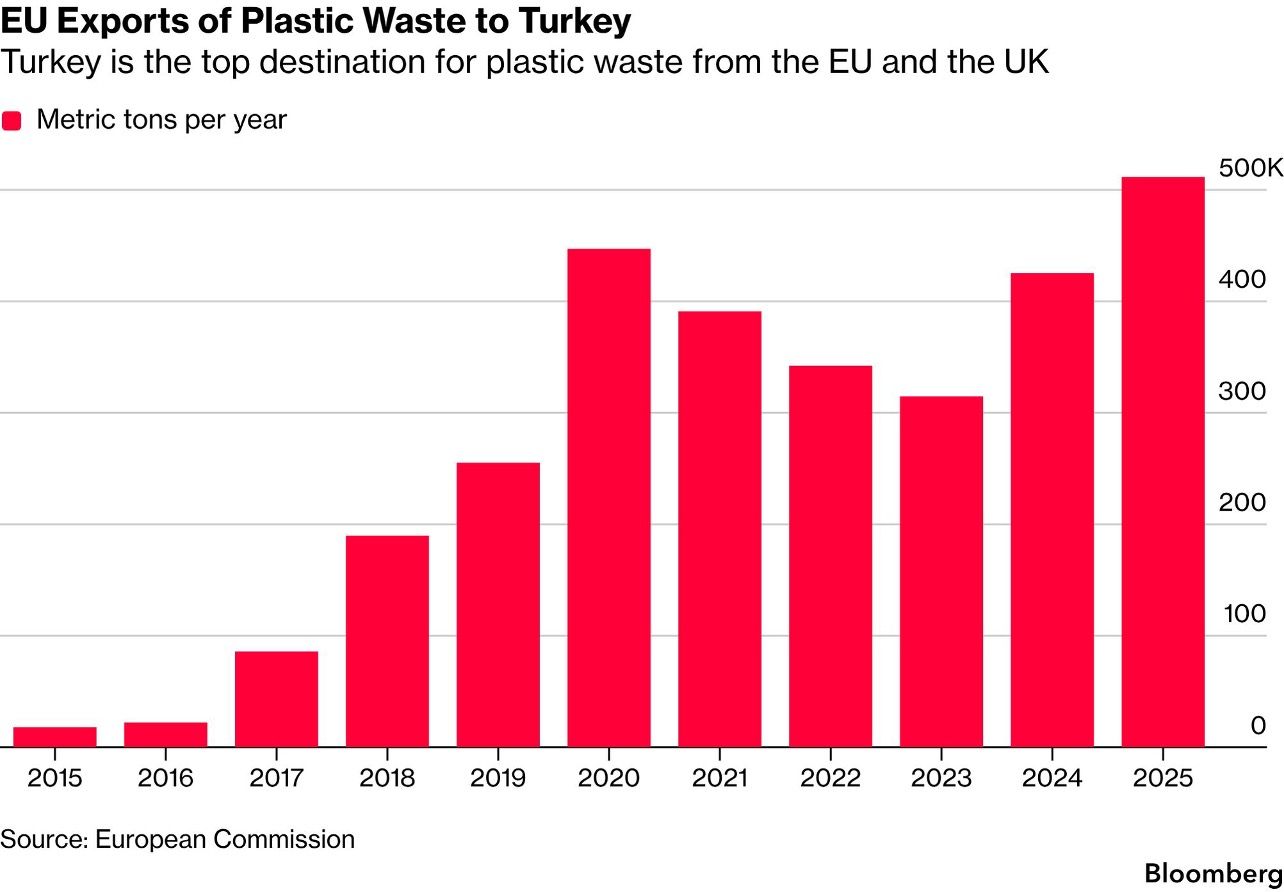
The massive collection of plastic waste in Europe masks a less flattering reality: only 20% is actually recycled. Between fragile outlets, high processing costs and rules that evolve faster than industrial capacity, recycling remains far from becoming a systematic solution. Turkey has become the main recipient of European exports, capturing 36% of flows in 2025, but this dynamic rests on precarious economic and environmental balances.
Since 2018, China has closed its borders to foreign plastic waste. This turning point redistributed international flows. Turkey, geographically close to Europe and equipped with a structured plastics industry, naturally emerged as the central destination. Its sector buys this waste to replace part of its imported raw materials, thereby reducing its supply costs.
This concentration presents a strategic risk: increased dependence on a single export market. Turkey's political stability, local environmental regulations and industrial capacity now condition the viability of the entire European recycling chain.
Recycling is not free. The process involves sorting the materials, washing them to remove impurities, transforming them into pellets or fibre, and treating the wastewater generated. For mixed or soiled waste, these steps accumulate substantial costs that quickly undermine economic profitability.
When the flows to be processed are of low quality or heterogeneous, recycling plants must choose: invest heavily in automated sorting or accept a very tight operating margin. This tension partly explains why imports of already-sorted waste from other countries can prove more attractive than managing local Turkish stocks. Local development of collection and sorting stagnates for lack of immediate profitability.
When recycling discharges and residues are not properly treated, a significant part of the environmental bill is externalised: soil pollution, contamination of waterways, health impacts for local populations. This asymmetry between the party that exports and the party that absorbs the impacts limits the real sustainability of the model.
From November 2026, European exports of plastic waste to non-OECD countries will be banned. However, as Turkey is an OECD member, it remains an authorised destination under certain conditions. This particular status creates a risk: European flows could be redirected to other OECD destinations or to developing countries not subject to the same restrictions, simply shifting the problem rather than solving it.
Since May 2026, any export of plastic waste requires prior consent from the receiving countries. This measure aims to strengthen traceability, but it depends on the real capacity of local administrations to monitor actual flows.
From 2030, plastic packaging placed on the European market will have to incorporate minimum percentages of recycled plastic. This obligation has a dual role: to create guaranteed demand for recycled materials and to encourage manufacturers to invest in new processing capacity.
However, these obligations apply only to the European market. They do not resolve the issues of recycling costs, nor do they mechanically increase the real processing rate. Their effectiveness will depend on the establishment of reliable logistics chains, regulated prices and sufficient penalties for non-compliance.
The ambitions stated at the international level, such as the COP31 presidency's goal of halving the growth of global waste by 2035, remain modest: the aim is to slow the increase, not to reduce existing stocks. Achieving these goals depends on three often-neglected pillars: financing to modernise infrastructure, real compliance controls and, above all, waste reduction at source.
Recycling becomes a genuinely sustainable solution when two conditions are met. First, outlets for recycled materials are contractually secured and economically viable. Second, the price of recycling explicitly includes the treatment of all environmental pollution generated, rather than externalising it to soils, water or neighbouring populations.
Without these two elements, increased collection of plastic waste risks becoming a political illusion: giving the impression of action without resolving the structural issues of processing and financing.
This is not investment advice.