September 15, 2026
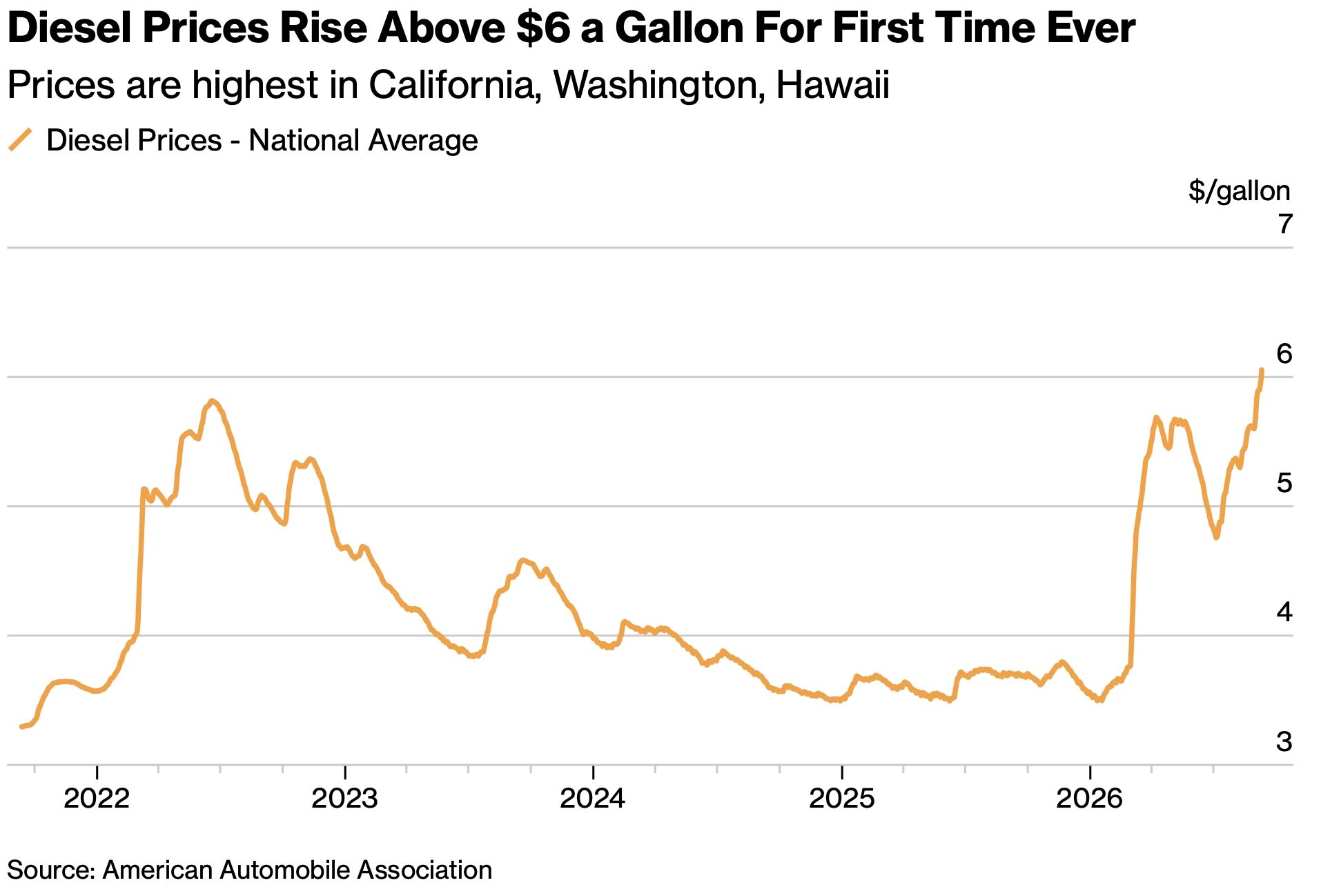
Diesel prices are reaching historic highs, revealing a refining crisis far more than a shortage of crude oil. While Brent is again above 100 dollars a barrel, Russian and Gulf diesel exports have collapsed by 76% in a year, creating cascading shocks across global logistics chains and corporate margins.
Diesel prices are reaching levels rarely seen. In the United States, US diesel futures have broken through the 5 dollars a gallon mark, roughly 1.14 euros a litre in wholesale terms before taxes. At the pump, diesel averaged 5.46 dollars a gallon in August, exceeding 6 dollars in September. In France, diesel reached around 2.30 euros a litre, all charges included.
For context, Brent is now trading 45% above its pre-war level, establishing new price floors that weigh on every oil-dependent economy.
The oil market is suffering above all from insufficient refining capacity. Russia, which accounted for nearly 10% of global trade in finished petroleum products, has seen its refineries damaged by Ukrainian strikes and has restricted its exports as a result. Russian and Persian Gulf exports have fallen spectacularly: from 2.2 million barrels a day a year ago to just 520,000 barrels a day in August, a 76% drop.
In the Gulf, geopolitics is worsening supply. Disruptions in the strategic straits of Hormuz and Bab el-Mandeb are holding back exports of finished products. The closure of Bab el-Mandeb in turn weakens the Red Sea route, the alternative bypassing Hormuz, creating a double vulnerability.
China is amplifying this strain: it is importing and refining less crude, simultaneously reducing its diesel sales on the global market.
The strategic reserves released consist essentially of crude. They therefore do not address the specific diesel deficit. Refineries could in theory favour diesel over other products such as jet fuel, but only by a few percentage points. Against a global market consuming 29.5 million barrels a day, this adjustment is not enough to fill the gap.
Road transport absorbs more than half of global diesel consumption. In the United States, this dependence is intensifying: the country combines long distances, a heavy weight of trucking in freight and exports to a global market in deficit.
Transport companies with fuel clauses pass part of the shock on to their customers. Small and medium-sized enterprises, less able to negotiate their rates or operating without an automatic adjustment mechanism, must absorb the increase in their margins and cash flow. This mechanism directly compresses their profitability.
Agriculture combines two exposures: fuel for its machinery and transport of its harvests. Construction, quarries, deliveries, the cold chain and waste collection are also highly dependent on competitively priced diesel.
US rail deserves a special mention: it runs almost entirely on diesel and the companies apply fuel surcharges. Europe, largely electrified, has greater resilience to this shock.
The price of diesel feeds a complex mechanism. Depending on each player's bargaining power, the shock compresses margins, raises selling prices, or destroys demand. These three trajectories coexist: some pass it on (inflation), others absorb it (margin compression), some abandon projects or reduce quantities (slowdown in activity). This mix makes diesel a simultaneous vector of inflation and economic drag, complicating the macroeconomic trajectory.
The surge in diesel illustrates how a geopolitical refining shock gradually spreads through the real economy. From global supply to carriers' margins, via consumer prices and the viability of small businesses, diesel acts as an amplifier of macroeconomic tensions. Its exorbitant cost does not reflect an absolute scarcity of oil, but a broken equilibrium in processing capacity.
This is not investment advice.