October 20, 2026
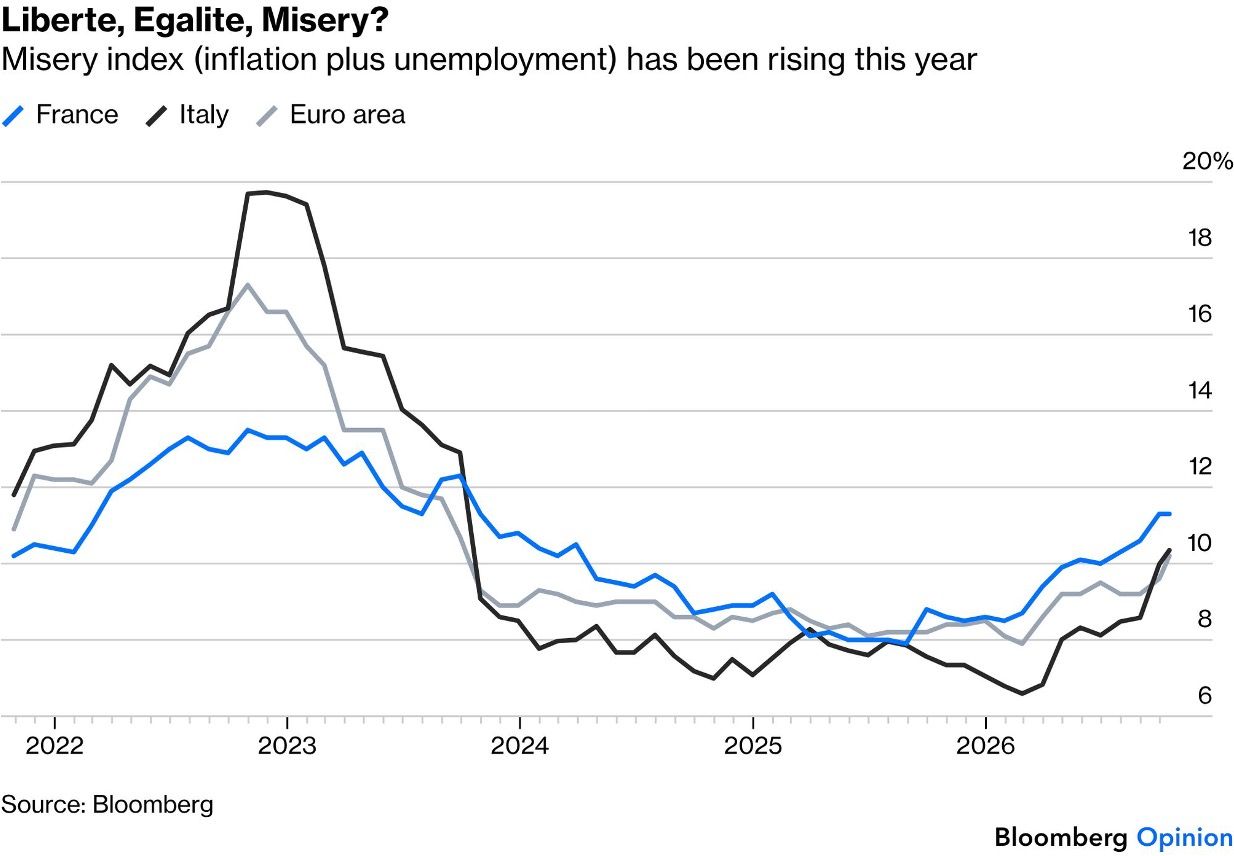
France faces a convergence of economic and social tensions that is beginning to weigh on financial markets. Between persistent inflation, fragile employment and the erosion of public confidence, three distinct crises are intertwining and reinforcing one another. This accumulation raises a central question: how to support households without compromising fiscal sustainability?
The Misery Index, a composite indicator of economic malaise, combines inflation and unemployment. In September, this barometer shows 11.4 points, combining inflation of 3.1% with an unemployment rate of 8.3% observed in the second quarter. Beyond this aggregate, energy concentrates the tensions: a rise of 21.3% year on year creates a direct budget shock for households.
This context does not stem merely from recent jolts. The disinflation of previous years did not bring prices back to their earlier levels. In other words, households are bearing both prices that have remained high and a new wave of energy increases hitting budgets already under strain.
For a large share of the French population, the picture is darkening. Jobs are becoming scarcer while essential expenses—housing, energy, transport—are climbing. This dynamic creates a double pressure: incomes stagnate while non-discretionary needs increase.
High public spending guarantees neither universally identical protection nor satisfactory access to services. Certain groups, notably young people, families and car-dependent workers, accumulate several handicaps: costly housing, significant travel expenses, thin financial margins. For these households, having a job is no longer enough to open up a prospect of progress.
Only 22% of French people say they trust politics. This figure reflects a deep breakdown of trust: when work no longer offers security, when public services seem deficient and when political leaders offer no credible alternative, discontent grows and crystallises.
This accumulation of malaise creates a classic dilemma: supporting households is costly in public spending, but reducing the deficit too quickly can curb economic activity and worsen unemployment. Markets are assessing precisely this capacity—or incapacity—of the government to adopt and hold a credible fiscal trajectory.
The ten-year yield spread between France and Germany, observed at 146 basis points on 19 October, embodies this concern. A lasting rise in rates progressively reduces the means available to the State, tightening the vice further.
A credible economic policy response must combine three elements:
The credibility of such a strategy rests as much on its financing as on the perception of a fair sharing of the effort. It is by this yardstick that markets, and public opinion, will assess the sustainability of the years ahead.
The French malaise becomes a financial risk on the day the need for social and economic protection grows faster than the State's capacity to respond without compromising its fiscal credibility. This convergence—heightened tension, reduced confidence, limited means—is the real issue for the French economy and, by extension, for portfolios exposed to French sovereign assets.
This is not investment advice.