September 18, 2026
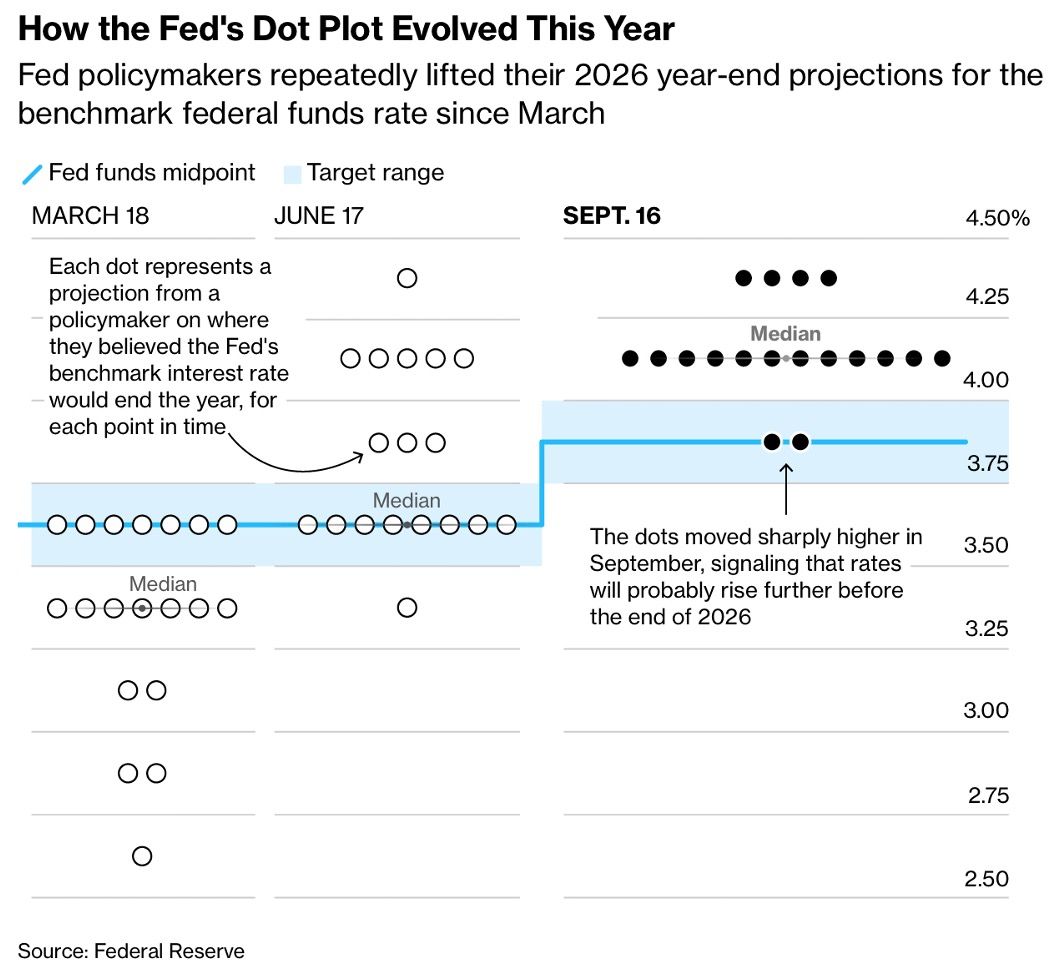
The US central bank raised its policy rates by 25 basis points in September 2026, taking its range to 3.75-4.00%. This unanimous decision is not a mere technical adjustment. It reflects a fundamentally revised economic diagnosis: that of an economy able to sustain robust growth and higher equilibrium rates than in the past at the same time.
The US economy displays solid fundamentals. Consumption remains resilient, the labour market stable, productivity strong and corporate investment robust, particularly in the artificial intelligence sector. Paradoxically, it is precisely this vigour that justifies the rate hike.
Kevin Warsh, an FOMC member, highlights a key point: despite long-term rates close to 5%, the economy continues to grow with no apparent slowdown. Financial conditions are therefore not truly restrictive. The Fed has merely withdrawn an additional "dose" of support, which amounts to acknowledging that the equilibrium interest rate—the one that stabilises the economy without overheating it—may be higher than before.
Inflation remains too high, but above all too broad-based. A significant number of price categories are still rising by more than 3% over six- and twelve-month periods. This is not a passing issue linked to oil or tariffs, but rather a structural trend reflecting supply tensions and wider demand pressures.
Disinflation, although gradual, is progressing too slowly to allow the Fed to cut rates. This observation justifies the change of course: stabilising inflation requires a higher policy rate than the one envisaged a few months ago.
The unanimous vote carries substantial political weight. Despite repeated calls for rates close to 1% or lower, the FOMC raised rates without internal dissent. This is a clear signal of independence, confirmed by the market reaction.
Investors did not panic: short-term rates rose (the 2-year yield increased), while the reaction at the long end was measured. This moderation suggests that markets anticipate further tightening without fearing a loss of control over inflation. It is a vote of confidence in the Fed's credibility.
Two readings now stand opposed.
The Fed risks putting too much of a brake on the consumer while inflation remains largely driven by cyclical factors: energy prices and temporary supply constraints. In this view, after one or two further hikes, a prolonged pause would follow, or even rate cuts.
AI, infrastructure investment, public deficits, energy security issues and the reshoring of production chains are durably increasing the economy's capital needs. If productivity rises enough to offset these pressures, the United States could simultaneously sustain stronger growth and higher equilibrium rates than in the previous decade.
This second, more structural reading is gaining plausibility. The September hike could herald far more than a simple short monetary cycle. It could signal the emergence of a lasting regime in which nominal growth, capital needs and equilibrium rates all remain markedly higher than what prevailed between 2010 and 2020.
Such a scenario would imply a thorough revision of investment expectations: higher nominal returns, but also potentially higher volatility, calling for a considered and diversified asset allocation.
The change of diagnosis matters more than the 25 basis point hike itself. An economy able to sustain high rates without slowing is an economy undergoing structural change, not a weakened one. This alters the probable trajectory of earnings, valuations and risk spreads.
The FOMC's unanimity also strengthens predictability: investors can anticipate measured tightening rather than a surprise. This clarity is often as valuable as the level of rates itself.
This is not investment advice.






