September 7, 2026
Norges Bank, manager of Norway's sovereign wealth fund, is proposing a major reallocation of its bond portfolio. Without changing the total weight of bonds (30% of the fund), the plan aims to reduce the overweight in Treasuries in favour of other US debt offering better yields. The strategy follows a simple logic: sovereign bonds would exceed the portfolio's real needs for stability and liquidity.
The plan keeps the total share of bonds unchanged at 30% of the fund, confirming that the objective is not to reduce exposure to bond markets. Within this allocation, however, government bonds would fall from 70% to 50%, that is from 21% to 15% of the overall fund.
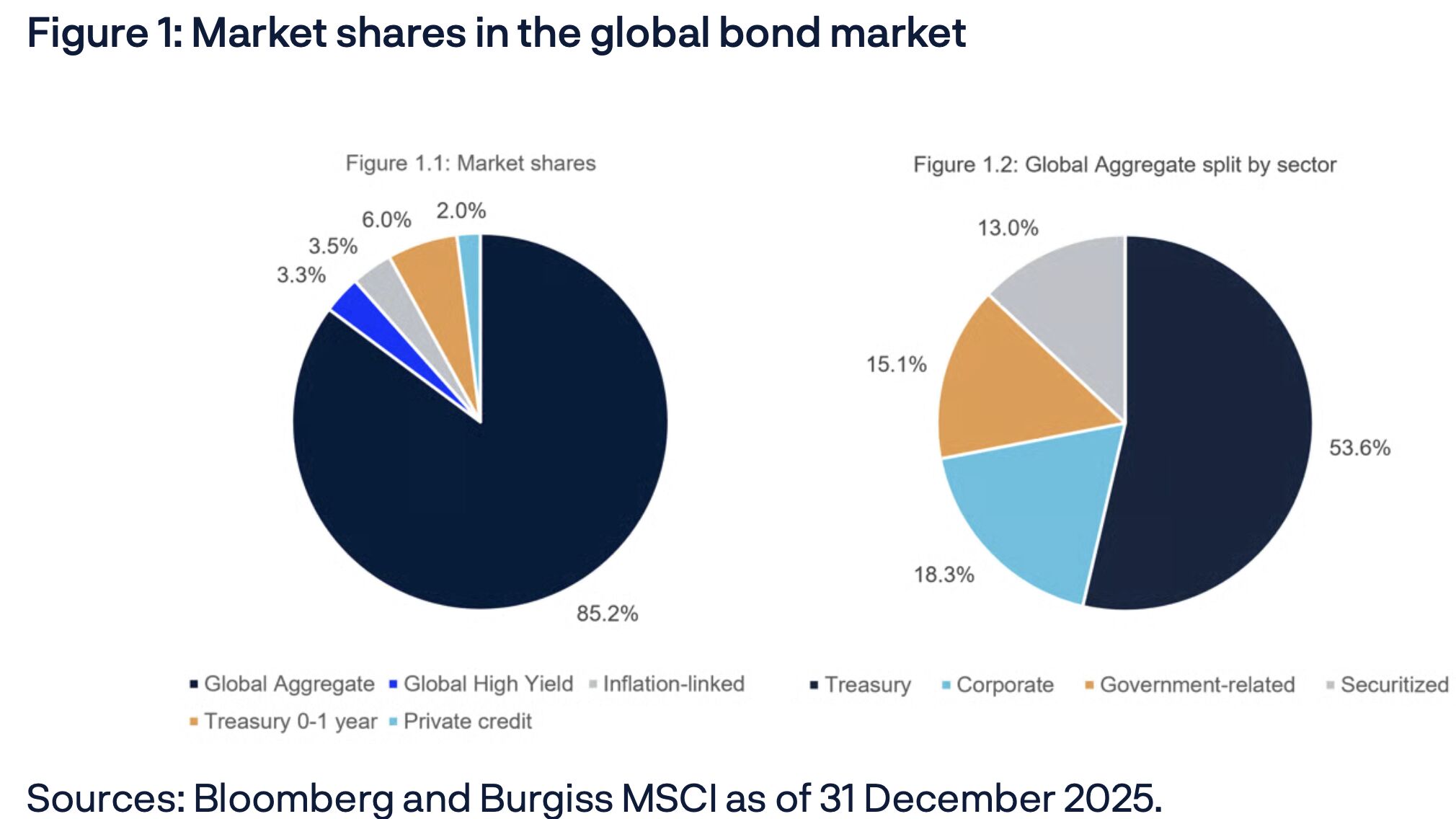
For Treasuries specifically, the decline would be more marked: from 34.1% to 21.9% of the bond index. By way of illustration, this reduction could represent around 80 billion dollars, although this figure is only an order of magnitude, since the transition would be spread over several years.
At the same time, US non-sovereign bonds would rise from 16.2% to 27.6%, while mortgage-backed securities guaranteed by US agencies (Fannie Mae, Freddie Mac, Ginnie Mae) would account for around 13% of the new index.
In a large investment portfolio, bonds fulfil three functions: reducing volatility, providing liquidity during rebalancing and generating yield. Norges Bank observes that the stabilising capacity depends above all on the total weight of bonds, more than on their internal composition.
The fund's historical simulations show that a sovereign share of 40% of the bond portfolio would have been sufficient during the most demanding stress episodes. By keeping 50%, the fund would preserve a comfortable safety margin while having surplus resources to reallocate.
This approach allows the fund to slightly increase its overall return without reopening the political question of reducing the total allocation to bonds. It is a pragmatic trade-off: maintaining portfolio protection while improving the return on bond assets.
The non-sovereign bonds the fund plans to increase—notably agency-guaranteed mortgage-backed securities—benefit from implicit government support that preserves a credit quality close to that of the US government. However, they offer additional yield that compensates for specific risks, notably the risk of early repayment of mortgage loans.
This segmentation of the US bond market allows the fund to remain heavily exposed to the US economy and financial system without excessively concentrating its holdings in pure Treasuries.
Exposure to the US currency would move from 52.9% to 52.5% of the bond portfolio. This stability shows that the reallocation is not a signal of a lack of confidence in the dollar or a withdrawal from the United States. It is a repositioning within the US bond market itself, intended to optimise the risk-return trade-off.
Although Norges Bank manages the fund day to day, it is the Norwegian Ministry of Finance that sets its benchmark index. Such a change requires the approval of Parliament. The expert council is due to deliver its report on 25 January 2027. The Ministry will then present its position in the spring White Paper, before parliamentary review and any amendment of the mandate.
Even if the plan were approved, the transition would begin at the earliest in the second half of 2027 and would be phased in gradually. The 80 billion dollars therefore represent a maximum potential adjustment, not an immediate sales programme. This reduces the risk of a sharp market impact and allows orderly execution.
This initiative by Norway's sovereign wealth fund reflects in-depth thinking on the optimal allocation between sovereign and non-sovereign bonds. It signals neither distrust of Treasuries nor a withdrawal from the US market, but rather a refinement of bond strategy to better balance protection and yield.
The extended timetable and political oversight are a reminder that even the largest sovereign funds operate under institutional constraints and must justify their allocation choices to their principals.
This is not investment advice.






