October 6, 2026
On 2 October, the G7 announced the release onto the market of 100 million barrels of crude and refined products over four months, with a particular focus on diesel. This initiative aims to ease tensions on European energy markets. European diesel immediately fell by more than 8% on futures markets, while Brent ended the session almost unchanged. A symbolic gesture that calms, temporarily, without resolving the underlying structural challenges.
The G7 announcement is part of a broader commitment. In March 2026, the group had promised to release 400 million barrels. As of this announcement, 325 million had already been brought to market according to the International Energy Agency. The additional 100 million include commitments not yet executed and therefore do not entirely constitute new supply beyond the initial programme.
The final composition remains unclear. The French proposal provided for 50 million barrels of diesel specifically. For reference, this quantity would represent around eleven days of European consumption, or 417,000 barrels per day over four months. A significant top-up, provided deliveries follow the announced schedule.
In energy markets, an essential distinction separates crude supply from usable supply. Releasing additional crude does not immediately provide diesel: the bottleneck is concentrated in refining and delivery.
Releasing already-refined fuel acts more directly on the shortage. Conversely, having more crude oil only creates demand if there is available processing capacity. This distinction explains why the reaction of futures markets, although notable, must be interpreted with caution.
If a lasting fall of $10 per barrel of diesel materialised and were fully passed on to the consumer, it would represent approximately 7 cents per litre including taxes, assuming a stable euro-dollar exchange rate of 1.12 and no changes in taxation or other costs. This order of magnitude remains conditional: it depends on the depth and duration of the market reaction.
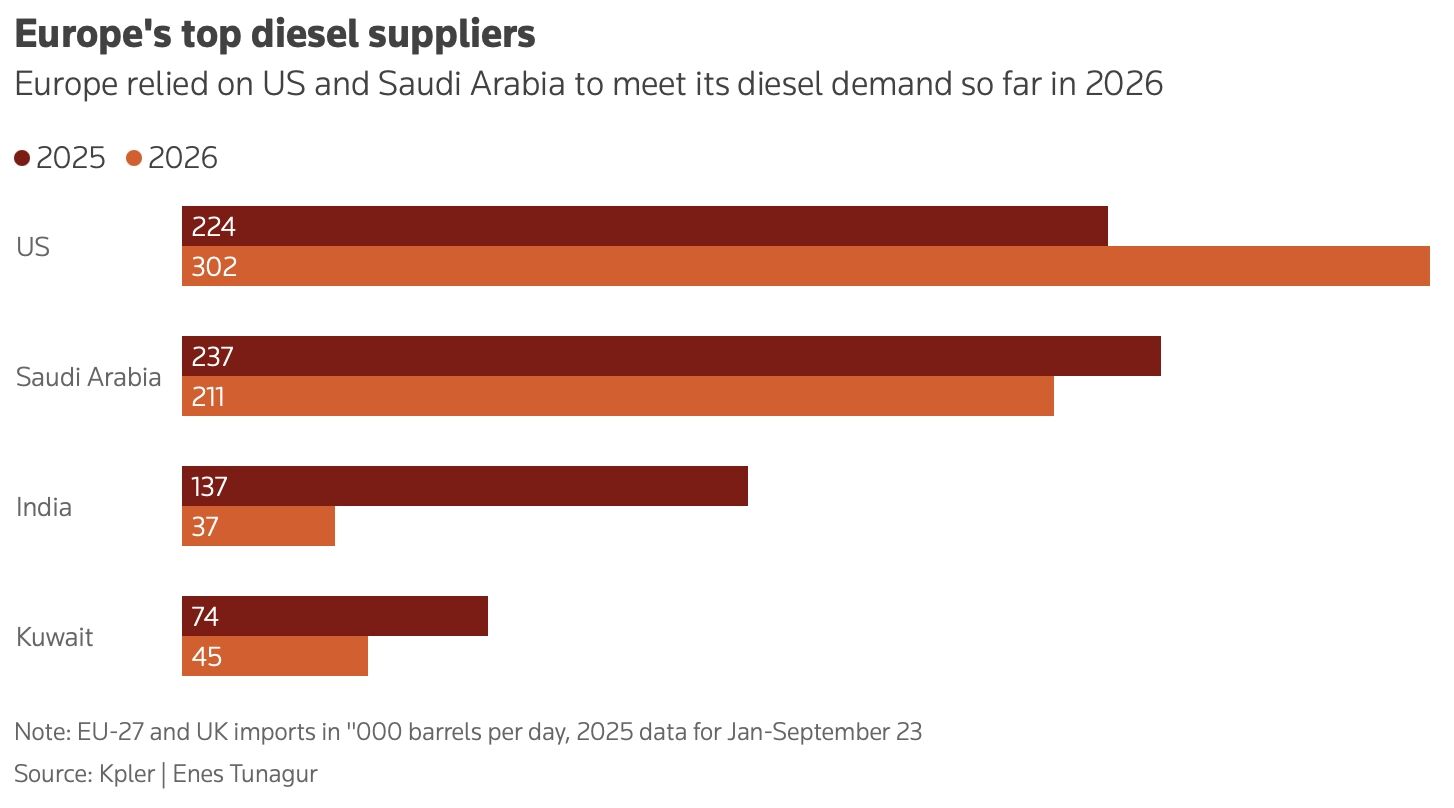
The intervention also has a geopolitical dimension. Washington is refraining from banning US diesel exports, a choice that preserves existing flows rather than creating new barrels. Europe thus avoids increased competition for the remaining global cargoes.
The G7's safety reserves temporarily offset the volumes missing from the markets. They repair neither existing refineries nor under-used shipping routes. The G7 therefore relieves the market today by reducing its safety cushion ahead of winter, an approach that postpones rather than resolves the structural tension.
Several indicators deserve close monitoring. The diesel actually delivered around 22 October will be a first test of the announcement's credibility. The evolution of stocks in the short and medium term will indicate whether this release produces lasting effects. Finally, the gradual return of exports from the Persian Gulf and Russia will weigh on the effectiveness of this intervention: the more alternative supply is rebuilt, the less visible the relief provided by the G7 will be.
This is not investment advice.