October 12, 2026
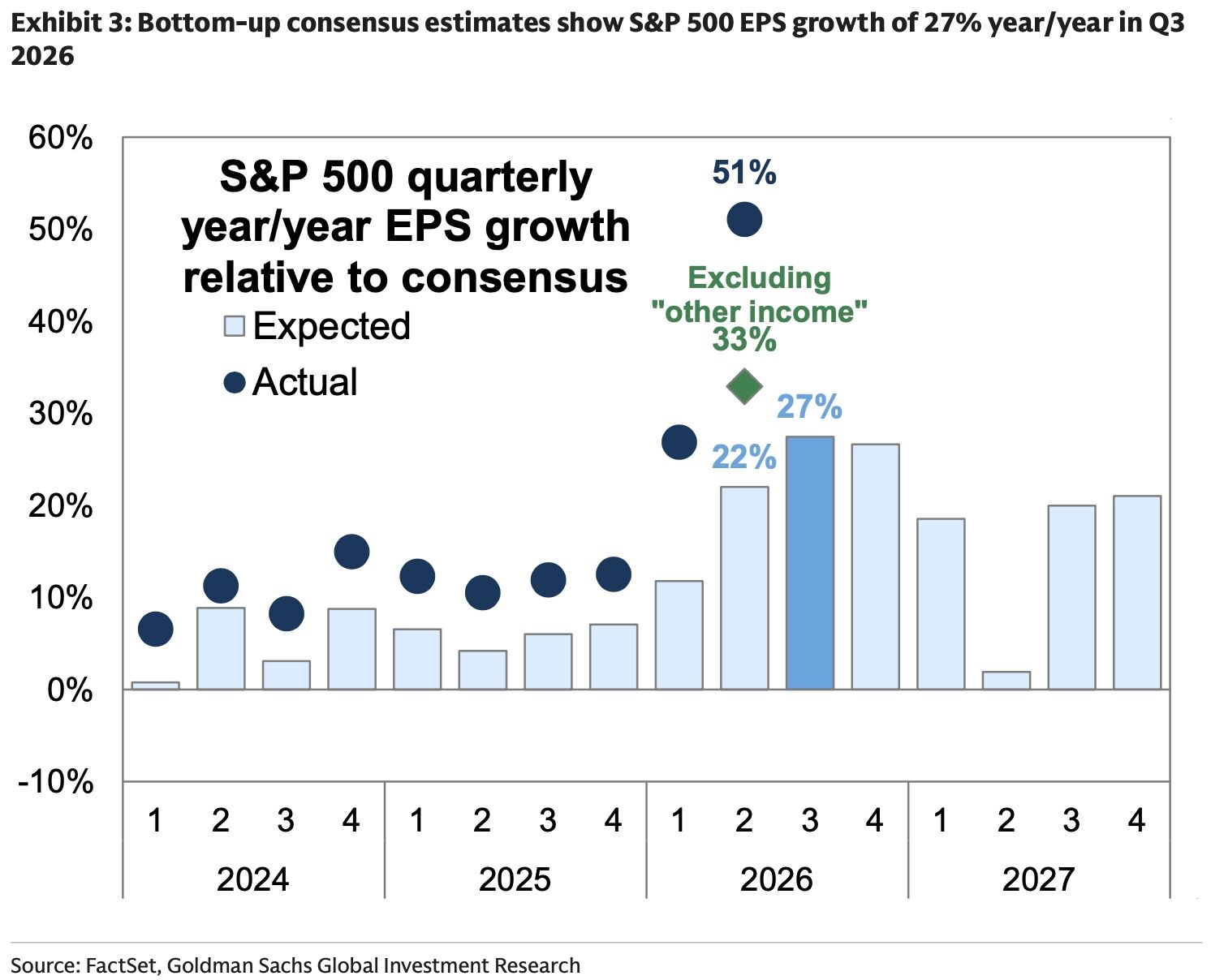
In the third quarter, equity index earnings show contrasting growth: +29.6% expected for the S&P 500 versus +21% for the STOXX 600. Behind these aggregate figures lie distinct realities across regions and sectors. In the United States, AI has become the main engine, while in Europe, energy underpins results. At the same time, the multiples applied to equity markets rest on earnings that have been sharply revised upwards, creating a structural dependence on future outlooks.
The 29.6% year-on-year increase in US earnings reflects a very specific dynamic: AI infrastructure suppliers alone account for 54% of this growth. Among them, NVIDIA and Micron Technology represent 34% of the gain, illustrating a high concentration of growth drivers.
This dynamic rests on the massive investments by the large technology platforms in their computing capacity. Their purchases of semiconductors and equipment directly support their suppliers. However, the sustainability of this trajectory depends on one critical condition: that the revenues generated by these new capacities economically justify the investments made.
For the median S&P 500 company, expected growth stands at 9%, a marked slowdown from the 14% observed in the previous quarter. This divergence reveals a structural vulnerability: the index depends heavily on a few engines. A disappointment in the outlook of AI suppliers, or a slowdown in demand for computing capacity, could put disproportionate pressure on the index as a whole.
The STOXX 600 posts earnings growth of 21%, but this increase is strongly supported by the energy sector. Excluding oil, refining and gas, expected growth falls to 9.7%, revealing a less dynamic real economy.
The banking sector benefits from high interest rates, while industry finds support in investment, notably in green technologies. Nevertheless, a mitigating mechanism delays the transmission of energy shocks: price hedges and long-term contracts provide temporary protection for margins.
This protection has a downside. Good results recorded today potentially precede margin compression tomorrow, notably in energy-sensitive sectors such as chemicals, automotive and transport. As contracts are renewed at higher market prices, pressure on operating profitability will intensify.
In early October, the S&P 500 was trading at 19 times expected earnings for the next twelve months, versus 13.7 times for the STOXX 600. Although multiples have come down from their peaks, their denominator rests entirely on earnings that the analyst consensus has sharply raised.
This configuration creates a form of apparent protection: as long as earnings grow in line with expectations, valuations remain justified. But this protection is conditional and fragile. It depends on the 2027 forecasts being met, which anticipate around 15% growth in US earnings, a slowdown from the current dynamic.
The elements the market will scrutinise in the coming months include the 2027 outlook, margin trends, volumes sold and cash available after the massive investments in AI. The main risk lies in a downward revision of the consensus, a process that often occurs when interest rates remain high and put pressure on future valuations.
This earnings season reflects a dichotomised global economy: in the United States, the concentration around AI creates a narrow dependence on a few companies; in Europe, the sector composition of gains masks moderate underlying growth that is fragile to future energy shocks.
Current valuations make the outcome of the 2027 forecasts decisive. Any scenario of downward consensus revision, against a backdrop of persistently high rates, could amplify price adjustments. For investors, this period calls for heightened vigilance on earnings quality, margin sustainability and companies' ability to maintain their projected growth trajectories.
This is not investment advice.