September 3, 2026
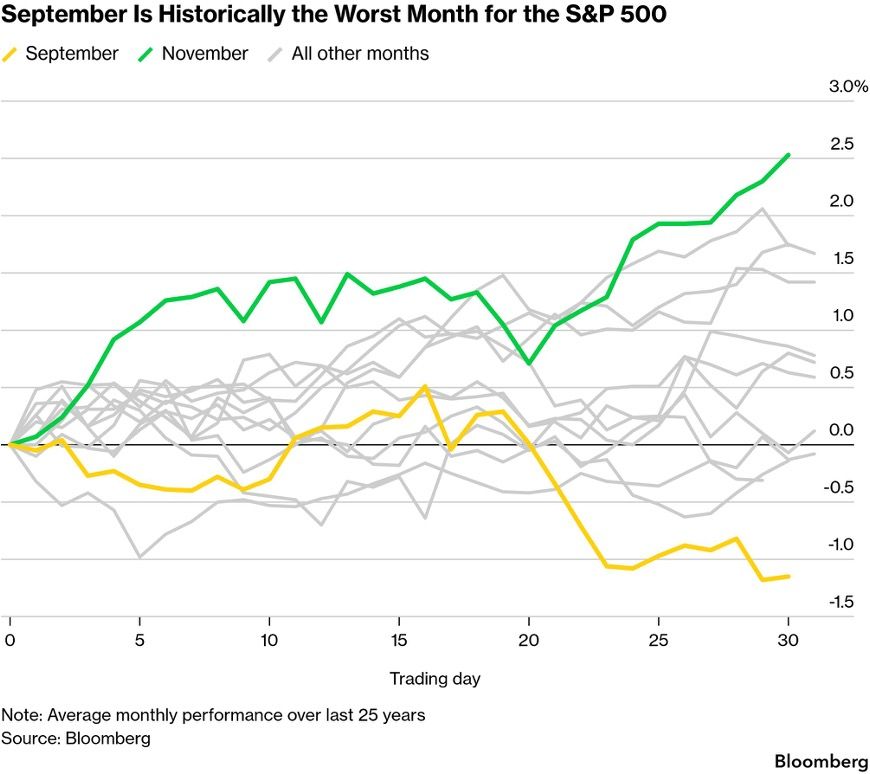
September has historically been the worst-performing month for the S&P 500 since 1928. Yet this recurring weakness conceals a more nuanced reality: it results from a combination of recurring mechanisms and a few major crises. For 2026, several unfavourable factors are accumulating, but the fundamental supports remain solid.
Since 1928, the S&P 500 has fallen by an average of 1.2% in September, its worst monthly performance. Over the last three decades, this decline averages 0.8%, against a rise of 0.9% for each of the other eleven months. At first glance, the seasonality seems established.
However, a crucial observation qualifies this conclusion: September ends higher in only around 45% of cases. In other words, the market still rises almost one year in two. This statistic measures the past and aggregates very different periods.
The historical average is heavily dragged down by a few major events that occurred in September: the Great Depression, the 1974 oil shock, the 2001 attacks, the bursting of the technology bubble and the 2008 financial crisis. The accumulation of these crises makes the average misleading. It reflects both a moderate recurring weakness and the disproportionate impact of a few historical accidents, but it does not automatically predetermine the outcome in 2026.
Several mechanisms combine to weigh on September. The return of investors after the summer is often accompanied by profit-taking, portfolio rebalancing at the end of the quarter and adjustments by funds ahead of their October fiscal year-end.
September also corresponds to a lull in the corporate earnings calendar. Deprived of major scheduled news, the market focuses more on macroeconomic indicators: inflation, employment, Fed monetary policy and political risks. This absence of positive news can amplify concerns about the overall economic environment.
These factors explain the month's structural vulnerability, but none of them guarantees a decline.
Several unfavourable factors are accumulating as September 2026 approaches. Oil is holding around $95, while the US ten-year yield is close to 4.8%. Inflation persists and a Fed rate hike is widely expected on 16 September.
This rise in rates particularly exposes the technology sector, whose valuations remain sensitive to bond yields. Added to this is a growing question about the real profitability of massive investments in artificial intelligence, after several years of strong gains in the stocks concerned.
The approach of the midterm elections heightens political uncertainty. Historically, September falls by an average of 1.5% in election years, a further deterioration compared with the normal average.
These risks should not obscure the solid supports underpinning the market. Corporate earnings are growing strongly, the absence of an imminent recession is largely confirmed and investor positioning remains relatively neutral. Volatility remains contained, signalling that fear has not taken over the trading floors.
An easing in the price of oil or a downward revision of the Fed's rate path could quickly trigger a rebound.
After its strong advance, the US market above all needs to catch its breath. A consolidation or moderate weakness in September would be consistent with a maturing cycle, without requiring a major correction. The unfavourable factors justify greater caution, but the solid fundamentals limit the risk of a break.
September's seasonality, while well documented, is not a prediction. It describes a historical tendency affected by a few major crises and a few recurring mechanisms. The future will depend far more on the Fed's actual monetary policy, the trajectory of oil, corporate earnings and political developments than on the calendar alone.
This is not investment advice.






