September 28, 2026
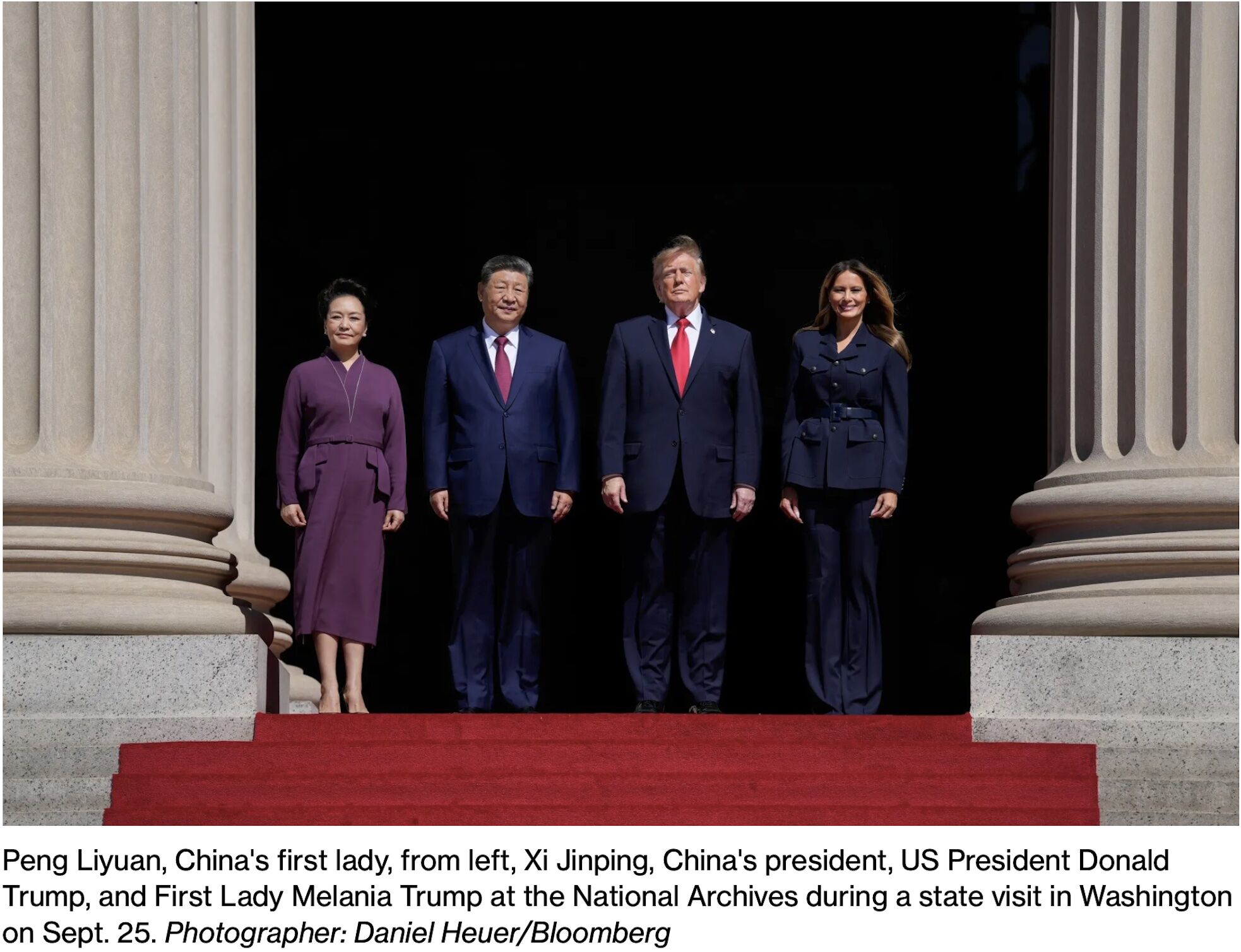
Xi Jinping's first state visit to Washington since 2015 left its mark through its pageantry: military ceremony, presidential dinner, access to the National Archives. Yet behind the diplomatic display, the agreements reached remain limited and piecemeal. The two powers have chosen to spare each other for now, without resolving their structural differences.
Despite the geopolitical rivalry, bilateral trade flows remain substantial. From January to July 2026, the United States imported $156.4 billion of Chinese goods and exported $65.2 billion to China. This asymmetry reflects the structure of global supply chains, where dependence remains mutual even in a context of tensions.
The main agreement concerns an extension of the tariff truce until 10 January 2027. More favourable treatment is envisaged for around $30 billion of goods in each direction, but this involves neither previously removed tariffs nor substantial new orders. This measure preserves what exists rather than expanding it.
On AI, the two sides simply agreed to open a dialogue by November, and to establish an alert channel in the event of an incident. No agreement was reached on the control of semiconductors or on common rules for technological development. This void confirms that competition on this strategic ground remains fully open.
On Iran, the two countries announced an agreement in principle against Iranian nuclear armament and against the imposition of tolls on international shipping lanes. However, no verifiable commitment was made regarding Chinese support for Tehran, which limits the scope of this convergence.
Regarding Taiwan, Xi explicitly asked Washington to oppose the island's independence. No official change in the US position was announced; arms sales to Taiwan remain pending. This stillness underlines that the fundamental differences on this critical issue remain unchanged.
For Washington, the truce offers a respite that extends beyond the US election in November. For Beijing, it buys time while retaining a major lever: control of rare earths and strategic minerals. Both sides thus avoid the immediate cost of a new escalation.
The real test of the rapprochement will play out in execution: the timetable for deliveries of Chinese magnets and critical materials, compliance with the agreed trade measures, and the time taken to finalise arms sales to Taiwan. Europe will also have to watch for a possible redirection of Chinese exports towards its markets if US measures were to harden later.
The diplomatic summit achieved its immediate objective: reducing short-term tension and avoiding a costly confrontation before the US elections. Nevertheless, it resolved none of the disagreements that have structured the Sino-American relationship for years: technology governance, trade balance, Taiwan's autonomy, regional influence.
The ceremony displays understanding between the two leaders. It hardly brings their positions closer on the essential issues. It is a tactical pause in a rivalry that remains open, not a strategic détente.
This is not investment advice.